
If you have been researching hair restoration in South Florida, you have probably seen ads built around a machine: a suction wand, a robotic arm, a branded system with its own logo. It is natural to wonder whether the machine is the thing you are paying for. The NeoGraft vs manual FUE question, along with ARTAS and SmartGraft, comes up in almost every consultation we hold in Aventura, and the honest answer is simpler than the marketing suggests.
All of these approaches are follicular unit extraction. Each one removes individual follicular units from the back and sides of the scalp and places them where hair has thinned. What changes is the tool that frees each graft and who, or what, guides it. Our team works by hand with fine handheld instruments, which you can read about on our FUE in Miami page. Below we explain how each device works, where it fits, what it means for cost, and why the people holding the instruments matter more than the brand on the equipment.
How the Devices Work: Same Procedure, Different Tools
Every FUE procedure follows the same basic steps. The donor area is trimmed and numbed. A small circular punch, usually under a millimeter wide, scores the skin around each follicular unit. The graft is then teased free, sorted, kept moist and cool, and placed into tiny recipient openings that set the angle and direction of the new hair.
Devices change one or two of those steps. Some add a motor to spin the punch and a vacuum to collect grafts. One adds cameras and a robotic arm to choose and score grafts. None of them replace the planning, the hairline design or, in most practices, the careful placement work. A "NeoGraft procedure" and an "ARTAS procedure" are both FUE procedures performed with a particular piece of equipment.
It helps to think of the steps as three separate jobs:
- Scoring: the punch circles the follicular unit and separates it from the surrounding skin. This can be done by hand, with a motorized punch, or by a robot.
- Collecting: the loosened graft is lifted out with fine forceps or drawn up by suction, then stored in a cool holding solution.
- Placing: each graft goes into a recipient site at a chosen angle and density. This step drives how natural the result looks, and it is still largely hand work everywhere.
NeoGraft and SmartGraft: Suction-Assisted FUE
NeoGraft and SmartGraft are motorized FUE systems. In general terms, a handheld piece spins or oscillates a small punch to score around each follicular unit, and a vacuum or pneumatic system helps lift and collect the grafts. A clinician still holds the handpiece and chooses where every punch goes, so these are assisted tools rather than automated ones.
What the manufacturers emphasize
NeoGraft has been marketed for years as an automated FUE platform, and its system also includes a pressure-based implantation option for placing grafts. SmartGraft describes a motorized handpiece that sends grafts by suction into a chilled, hydrated storage chamber and keeps a running graft count. Both companies focus on speed, consistent graft handling and reducing how often grafts are touched by forceps.
Where they fit
Motorized tools can help a team work at a steady pace through larger sessions, and some clinics train their staff around a single system so the workflow is predictable. Like any FUE tool, the outcome depends on punch size, depth control, the angle the operator follows and how gently grafts are handled afterward.
ARTAS: Robotic, Image-Guided FUE
ARTAS works differently. It uses cameras and software to map the donor area, identify follicular units and calculate their angle. A robotic arm then positions a punch and scores around the chosen grafts while a clinician supervises, adjusts settings and can pause or redirect it. The grafts are removed and sorted by the team, and in many practices they are placed by hand. Newer versions of the system have added tools for planning and creating recipient sites.
The appeal is consistency: a robot does not tire as the hours pass, and the software spreads extraction across the donor area according to its settings. The system relies on clear imaging of the hair, so many practices note that it tends to suit patients whose donor hair contrasts well with their skin. Very light, gray or tightly curled hair can be harder for image-guided equipment, and some patients are better served by a hand-guided approach.
Robotic equipment is a significant investment for a clinic, and the donor area still has to be prepared, monitored and protected by people. A robot follows the plan it is given, so the quality of that plan still comes down to the clinical team.
Manual Handheld FUE: How Our Team Works
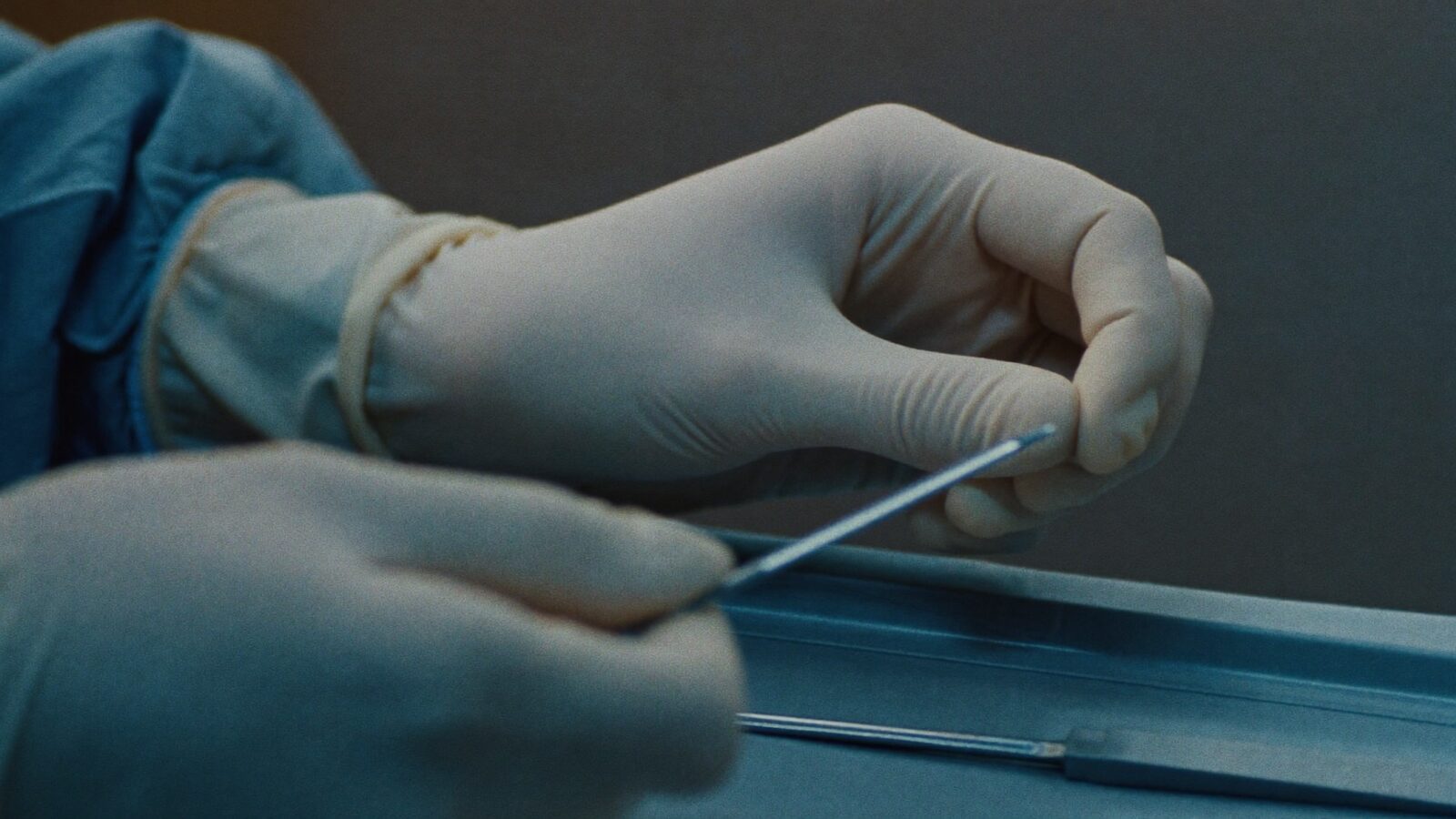
At Nova Medical Hair Transplant Miami, grafts are extracted by hand with fine handheld FUE instruments by the surgical team. We do not use robots or suction devices. Manual FUE means a trained technician holds a small punch, feels the resistance of the skin, watches the exit angle of each hair and adjusts depth graft by graft. That tactile feedback matters when hair changes direction across the donor area, when skin is thicker in one spot than another, or when hair curls below the surface.
Dr. Adam Rubinstein, MD FACS, a board-certified plastic surgeon, reviews and approves every plan and oversees the procedure. The doctor designs the plan with you, sets the graft count and the hairline, and directs how the donor area is used. Our step-by-step approach is laid out in the Nova Medical FUE protocol, from donor mapping to graft storage and placement.
A few practical points about how manual FUE works here:
- Capacity: up to about 4,000 grafts in one day, depending on donor density. Very large plans are split into two sessions.
- Donor protection: extraction is spread out so the back of the head does not look thinned, and reserve is left for future loss.
- Comfort: local anesthesia, with oral pain relief available. No general anesthesia, and you go home the same day.
- Options: FUT and DHI-style placement are also available when they suit the case better.
- Follow-up: 12 months of follow-up so we can track growth with you.
Hand extraction also gives flexibility for less common requests. Patients who want to keep length on top, for example, may be candidates for a non-shave or partially shaved transplant, which calls for careful, selective work in the donor area.
Side-by-Side: Device-Assisted vs Manual FUE
This table summarizes the general differences. It describes how the approaches work in broad terms, not the results of any particular clinic, since results depend on the team using the tools.
| Factor | NeoGraft / SmartGraft | ARTAS | Manual handheld FUE |
| Who guides each punch | Clinician holds a motorized handpiece | Robotic arm guided by cameras, supervised by staff | Trained technician by hand |
| How grafts are collected | Suction or pneumatic assist | Removed and sorted by the team | Fine forceps, by hand |
| Graft placement | By hand or with a device-specific implanter | Often by hand | By hand, with DHI-style placement as an option |
| Hair types | Broad, depends on operator skill | Tends to favor clear contrast between hair and skin | Broad, including curly, light and gray hair |
| Tactile feedback | Partial, through the handpiece | Limited, software driven | Full, adjusted graft by graft |
| Main variable in results | Operator skill and planning | Settings, supervision and planning | Operator skill and planning |
Good to know: a device name describes equipment, not a separate surgery. If a quote says "NeoGraft," "SmartGraft" or "ARTAS," it is still a quote for FUE, and you can compare it on graft count, donor planning and who does the work.
Does the Device Change the Price?
Equipment can affect what a clinic charges, because branded systems often come with purchase, lease or per-use costs that a practice may pass on. That is not a reason to assume one approach is better value. What you pay should reflect how many grafts you need, how complex the case is and the level of oversight involved.
At our Aventura clinic, pricing runs $3.99 to $7.99 per graft, and most procedures fall between $4,000 and $15,000. There are no session fees, and 0% financing is available for the first 12 months. You receive a written quote after a free consultation. Our hair transplant cost in Miami page breaks down what moves a quote up or down.
When comparing quotes across clinics in Miami-Dade, Broward or Palm Beach, line them up on the same terms: total grafts, price per graft, whether follow-up is included, and who extracts and places the grafts. A lower headline number for a branded device package is only useful if the graft count and the planning match what you actually need.
Which Matters More: the Device or the Team?
For most patients, the team matters more. A tool can only follow the plan and hands guiding it. The things that decide whether a transplant looks natural in five or ten years are mostly human decisions: where the hairline sits, how density is spread, how much donor reserve is kept, and how gently each graft is handled during the hours it spends outside the body.
Planning is where those decisions start. If your loss is mostly at the front, the conversation is about framing the face, which our guide to hairline design for your face shape covers. If it is mostly at the back, the trade-offs are different, and our post on crown vs hairline priorities explains how to divide a limited supply of grafts.
Questions worth asking any clinic
- Who scores and removes the grafts? Ask whether it is a technician, a nurse or a machine, and how much experience they have.
- Who designs the hairline? Ask whether a physician reviews and approves the plan before procedure day.
- How is the donor area protected? Ask how many grafts they would leave in reserve for future loss.
- How are grafts stored? Ask about holding solution, temperature and how long grafts typically wait before placement.
- What follow-up is included? Ask how long they track growth and who you call with questions.
Real-World Scenarios: Who Each Approach Suits
A few common situations show how the choice plays out in practice. These are general patterns, and your own plan comes from an exam of your scalp and donor area.
Straight dark hair, moderate loss: almost any well-run FUE approach can work. The decision should rest on the planning, the graft count and the team rather than the equipment.
Curly, coily, gray or very light hair: hair that curves below the skin or blends with the scalp is harder to read with cameras. A hand-guided approach, where the technician can adjust angle and depth by feel, is often a comfortable fit.
Large sessions: whatever the tool, the donor area sets the ceiling. With manual FUE here, up to about 4,000 grafts may be possible in one day, and bigger plans are split into two sessions to protect the donor area and keep grafts healthy.
See How Manual FUE Fits Your Hair
Book a free consultation in Aventura or online. We will examine your donor area, explain how handheld FUE would work for you, and give you a written plan and quote.