
If you have spent any time reading about hair restoration online, you have probably seen sapphire fue promoted as a newer, gentler version of the procedure. The name sounds premium, and the before-and-after photos attached to it often look impressive. But what does the word "sapphire" actually change, and is it something you should insist on when you compare clinics?
The short answer: sapphire refers to the material of a tiny blade used to open the recipient sites where grafts are placed. It does not change how grafts are harvested, it does not create new hair, and it is only one small variable in a long chain of decisions that shape your result. This guide explains the blade, the claims made for it, what is and is not well supported, and how it compares with steel. If you want the bigger picture of the procedure itself first, our page on follicular unit extraction in Aventura covers the full process from consultation to growth.
What a Sapphire Blade Is
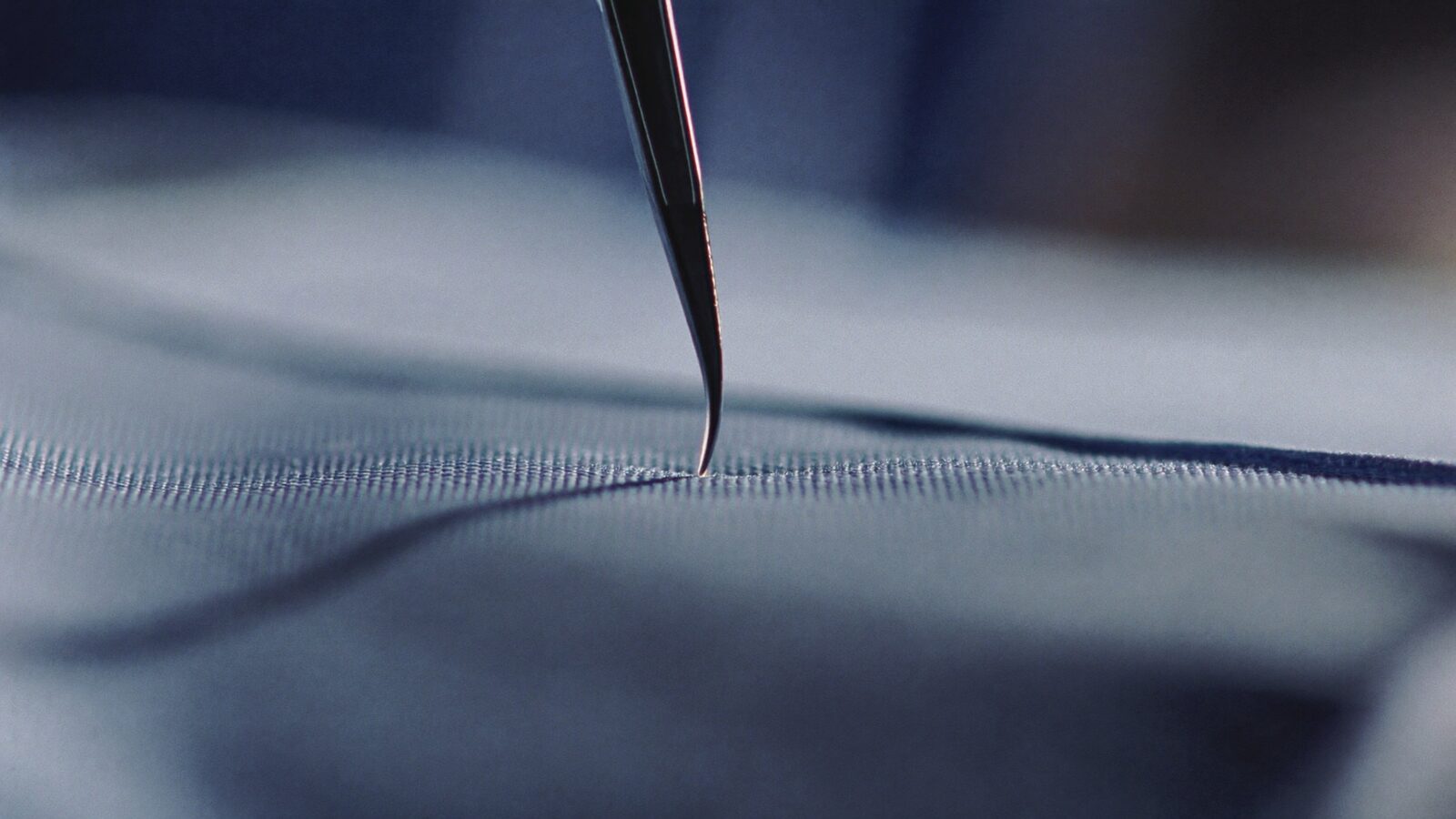
A sapphire blade is a very small cutting tip made from synthetic sapphire, a lab-grown crystal form of aluminum oxide. It is extremely hard, and it can be polished to a smooth, fine edge. In hair restoration, these tips are mounted on a handle and used to make the small openings, often called slits or recipient sites, in the thinning area of the scalp.
It helps to understand where that step sits in the day. An FUE procedure has three main stages:
- Extraction: individual follicular units are removed from the donor area at the back and sides of the head with a tiny round punch.
- Site creation: small openings are made in the recipient area, setting the angle, direction and spacing of every future hair.
- Implantation: the grafts are placed into those openings, either with forceps or with an implanter pen.
Sapphire blades belong only to the second stage. So "sapphire FUE" is really a standard FUE harvest paired with a particular tool for opening sites. The extraction step, which has the largest influence on donor scarring and graft survival, is not affected by the blade material at all.
The Claimed Benefits
Clinics that promote sapphire blades usually make a similar set of claims. It is worth listing them clearly before looking at how solid each one is:
- Smaller, cleaner incisions: the polished crystal edge is said to cut more smoothly and cause less tearing of the surrounding skin.
- Less tissue trauma: a smoother cut is said to mean less bruising, less swelling and less disruption to nearby blood vessels.
- Faster healing: fewer crusts and quicker closure of the tiny openings in the first week or two.
- Denser packing: because each site is small, more grafts can supposedly be placed closer together.
- More natural angles: the V-shaped tip is said to make it easier to follow the original direction of hair growth.
- Lower infection risk: a smaller wound surface is said to reduce the chance of infection.
Every one of these sounds reasonable, and some may hold true in skilled hands. The issue is that most of them describe a goal of good site creation in general, not a unique property of sapphire. A well-chosen steel blade cut to the right width, used by a careful team, aims for exactly the same things.
What the Evidence Actually Shows
This is where honest information is harder to find. Much of what is written about sapphire blades comes from clinic websites and promotional articles rather than independent research. Published comparisons are few, often small, and frequently come from clinics that already use and market the tool. That does not prove the claims are false. It means they have not been tested to the standard most patients assume when they read a confident marketing page.
What can be said fairly:
- The material is genuinely hard and sharp: sapphire can hold a fine, smooth edge, so the basic premise of a clean cut is plausible.
- Healing differences, if any, appear modest: early crusting and redness after any modern FUE usually settle within one to two weeks, whatever blade is used. There is limited reliable evidence that sapphire meaningfully shortens that timeline.
- Density depends on more than the blade: how closely grafts can be packed depends on the size of the grafts, the health of the scalp, the blood supply and the experience of the person creating sites. A blade alone cannot overcome a poor plan.
- Graft survival is driven by handling: keeping grafts moist, cool and out of the body for as short a time as possible matters a great deal, and it has nothing to do with the blade material.
The honest takeaway: sapphire blades are a legitimate tool, but the evidence that they produce better final results than well-sized steel blades is limited. Treat the word "sapphire" as a detail worth asking about, not as a reason to choose a clinic.
When you see a dramatic before-and-after labeled sapphire FUE, remember that the photo reflects the whole procedure: the hairline design, the number of grafts, the donor quality, the aftercare and twelve months of growth. It is not a controlled test of one blade against another.
Sapphire vs Steel Blades Side by Side
Steel blades and needles have been used to create recipient sites for decades. Many teams use custom-cut steel micro-blades trimmed to a specific width so each opening matches the measured size of the grafts going into it. That matching is one of the most important details in site creation, because an opening that is too large can leave a slight pit or let a graft sit too low, while one that is too small can squeeze the graft.
| Factor | Sapphire blade | Steel micro-blade or needle |
| Material | Synthetic sapphire crystal | Surgical stainless steel |
| Edge | Very hard, polished, holds sharpness | Very sharp when fresh, typically single-use |
| Sizing | Comes in set widths | Can be cut to an exact width for each case |
| Durability | Brittle; tips can chip if mishandled | Flexible; less likely to chip |
| Cost to the clinic | Higher | Lower |
| Evidence of better final growth | Limited | Long track record of natural results |
| Biggest factor in outcome | Skill, planning and graft handling | Skill, planning and graft handling |
The last row is the point. Neither column wins on its own. A careful team with steel can produce a natural, dense result, and a rushed team with sapphire can still produce a poor one.
Where implanter pens fit in
Some clinics combine sapphire site creation with forceps placement, while others skip pre-made sites and use an implanter pen that creates the opening and places the graft in a single motion. That second approach is the basis of DHI. If you are weighing those options, our page on DHI-style placement and the guide comparing DHI and standard FUE explain the trade-offs in more detail.
Does Sapphire FUE Cost More?
Abroad, sapphire is often sold as an upgrade package with a higher price. In practice, the blade itself is a small part of the cost of a procedure. The bulk of what you pay for is the team's time, the number of grafts, the planning and the follow-up care.
At Nova Medical in Aventura, pricing runs from $3.99 to $7.99 per graft, with most procedures falling between $4,000 and $15,000. There are no session fees, and 0% financing is available for the first 12 months. You receive a written quote after a free consultation, so you can see exactly what you are paying for rather than a vague package name. Our hair transplant cost guide breaks down how graft counts and complexity shape the final number.
If a quote from another clinic includes a sapphire surcharge, ask what specifically changes in your procedure for that extra amount, and whether the same result is achievable without it.
What Matters More Than the Blade
If you set the marketing aside, a handful of factors carry far more weight than the material of a site-making tool. These are the things worth focusing on when you compare options:
- Who designs and oversees the plan: at our clinic, Dr. Adam Rubinstein, MD FACS, a board-certified plastic surgeon, reviews and approves every plan and oversees the procedure.
- How the donor area is protected: responsible harvesting avoids overharvesting and leaves reserve for future loss. Up to about 4,000 grafts can be moved in one day depending on donor density, and very large plans are split into two sessions.
- How grafts are extracted: our surgical team extracts grafts by hand with fine handheld FUE instruments rather than robots or suction devices. You can read how that compares in our guide to manual versus machine-assisted FUE.
- Hairline design: angle, direction and irregularity at the front edge make a result look natural or obvious.
- Aftercare and follow-up: 12 months of follow-up lets the team track growth and adjust medical support if needed.
Living in South Florida adds one more factor. Sun, heat, humidity, pools and the beach all affect the first weeks of healing far more than the blade used to open your sites. A clear aftercare plan, a loose hat and patience with the ocean will do more for your scalp than a gemstone tip.
Questions to Ask a Clinic Offering Sapphire FUE
If a clinic leads with sapphire blades, that is fine. Use it as a starting point for a better conversation. These questions help separate a thoughtful team from a marketing script:
- Which stage uses the sapphire blade? A clear answer should be site creation only. If the clinic implies it affects extraction or growth directly, ask them to explain.
- How do you size the sites? Ask whether openings are matched to measured graft size, and who decides that.
- Who makes the sites and places the grafts? Ask who designs the plan, who oversees the day and who does each step.
- How many grafts do you recommend, and why? A responsible answer refers to your donor density and future loss, not a fixed package.
- What would change if you used steel instead? A candid team will tell you the honest difference is small.
- Is there a surcharge for sapphire? If so, what does it pay for?
- What follow-up is included? Ask how long the clinic monitors your growth after the procedure.
How We Approach Your Consultation
At Nova Medical in Aventura, our team starts with your scalp, not a product name. We look at your donor density, the pattern and speed of your loss, your age, your hair texture and what you want your hair to look like in ten years. From there, Dr. Rubinstein designs the plan with you and explains which technique and placement method suit your case. If you are still choosing between harvesting methods, our guide on FUE versus FUT covers that decision.
The procedure is done under local anesthesia, oral pain relief is available, and you go home the same day. Patients from Miami Beach, Fort Lauderdale, Broward and Palm Beach often start with an online photo and video consultation before visiting in person, and complimentary transportation to and from the clinic is available for patients who travel. Whatever instruments are part of your plan, you will know what they are, why they were chosen and what result is realistic before anything is booked.
Get a Straight Answer About Your Plan
Book a free consultation in Aventura or start online with photos and a video call. We will explain the technique, the instruments and a realistic result for your scalp.