
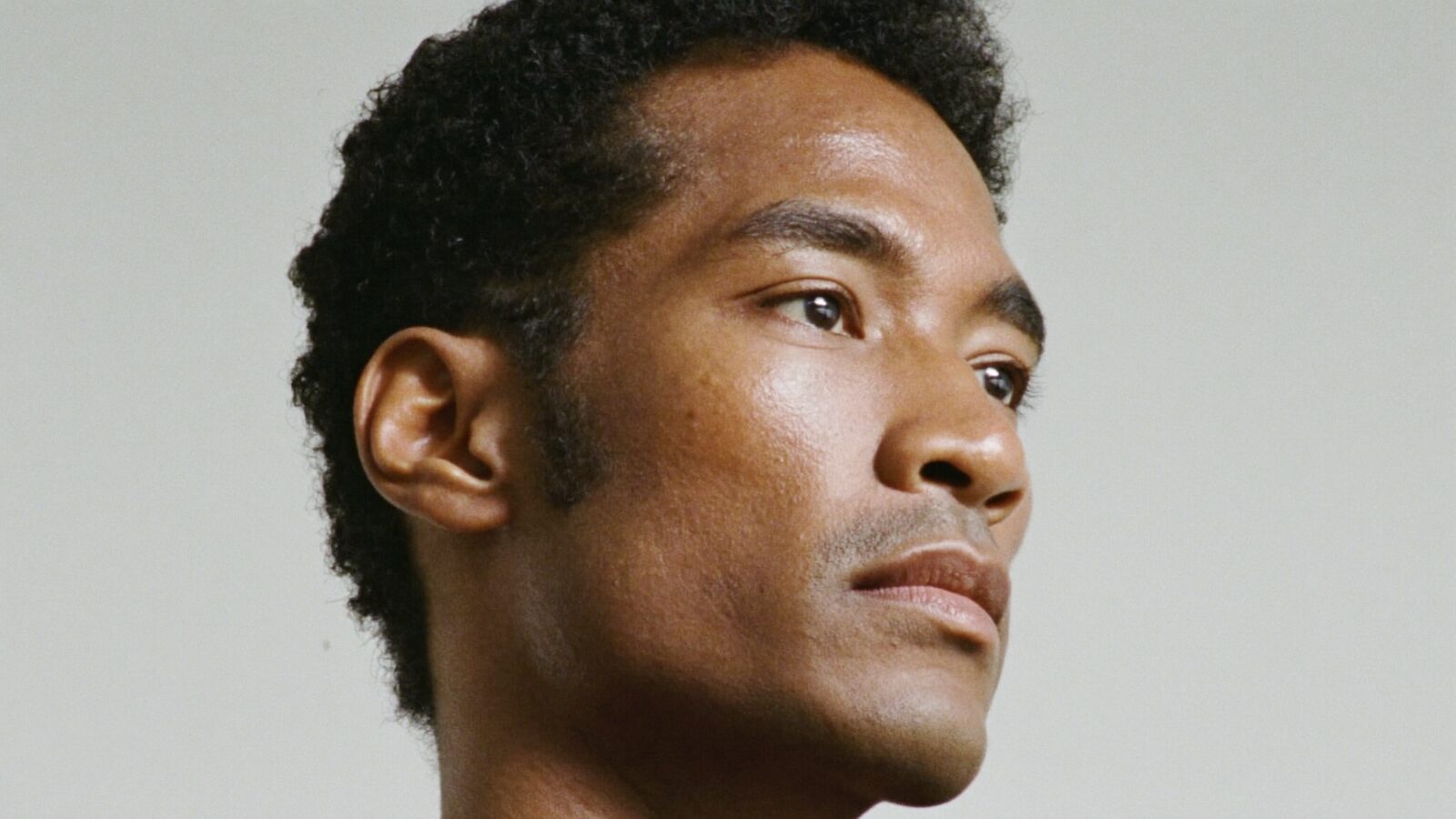
Choosing a hairline for face shape is less about copying a photo and more about proportion. The same hairline that frames one face well can make another look longer, wider or oddly young. A good design looks at where your forehead sits relative to your eyes, nose and chin, how your temples recede, how strong your jaw is and what your hair will likely do over the next twenty years.
At our Aventura clinic, hairline planning happens before anyone talks about graft counts. Dr. Adam Rubinstein, MD FACS reviews the drawing with you, and the surgical team then places each graft by hand following that plan. If you want to understand the procedure that sits behind the design, our FUE hair transplant page walks through how single grafts are taken and placed. This guide focuses on the design itself: the measurements, the shape choices and the small details that separate a hairline that looks grown from one that looks placed.
Facial Thirds and Hairline Height
Most hairline planning starts with an old artist's rule: a balanced face divides roughly into three equal vertical sections. The lower third runs from the bottom of the chin to the base of the nose, the middle third from the nose to the brow, and the upper third from the brow to the hairline. When the upper third is noticeably taller than the other two, the forehead reads as large. When it is shorter, the face can look compressed.
In practice the thirds are a starting point, not a ruler you obey. Faces are rarely symmetrical, and a mature adult man usually looks more natural with an upper third that is a little taller than the other two. For many men the front point of the hairline lands roughly 7 to 9 centimeters above the brows, but the right number depends on brow position, forehead slope and how much hair you have to work with.
A few landmarks guide the height decision:
- The forehead crease: the point where a flat forehead starts to curve back toward the top of the head. Placing the hairline well in front of this bend often looks like a wall of hair sitting on a flat surface.
- The brow line: a hairline that follows the general arc of the brows tends to read as part of the face, not as something added to it.
- Old photos: pictures from your early twenties show where your natural hairline once sat, which helps set a realistic target that is usually a bit higher than that teenage line.
- The donor supply: every centimeter you lower the hairline adds area that needs grafts, and that area has to be paid for from a finite donor zone.
Shapes for Oval, Round and Square Faces
Face shape mainly changes two things: how the front of the hairline curves and how the temple corners are handled. The aim is balance. A design that adds length to a face that is already long, or width to a face that is already wide, works against you.
| Face shape | Common traits | Hairline approach that often suits it |
| Oval | Balanced length and width, gently rounded jaw | Flexible; a soft, slightly rounded front with mild temple recession usually looks natural |
| Round | Similar width and length, full cheeks, soft jaw | A touch more height and defined temple corners add length and some angle |
| Square | Wide forehead, strong jaw, angular features | A straighter front with softened corners keeps the strength without looking boxy |
| Long or oblong | Face longer than it is wide, tall forehead | A slightly lower, fuller front helps shorten the upper third |
| Heart | Wider forehead, narrow chin | A rounded front and gentle corners avoid adding width at the top |
An oval face is the most forgiving. Almost any reasonable height works, so the design tends to follow your old hairline pattern and your age.
A round face benefits from some structure. Placing the hairline a few millimeters higher and giving the temples a clear angle adds vertical length and a bit of definition, which is often what people with round faces say they want.
A square face already has strong angles. A straight, flat line from temple to temple can exaggerate that, so the front usually keeps a fairly level shape while the corners are rounded slightly into the temples.
A long face is the one case where a slightly lower hairline genuinely helps, because it shortens the upper third. That only works if the donor area can support the extra coverage, which is why the decision is always made together with a donor assessment.
Irregularity and Single-Hair Grafts
Natural hairlines are never a clean line. Look closely at someone who has never lost hair and you will see a soft zone a few millimeters deep where single hairs scatter forward, small clusters dip in and out, and density slowly builds behind them. This transition zone is what makes a hairline look grown.
Recreating it depends on graft selection. Follicular units come out of the donor area in groups of one, two, three and sometimes four hairs. The front row uses almost only single-hair grafts, placed at irregular spacing with tiny gaps and small forward points sometimes called micro-irregularities. Two-hair grafts fill in behind them, and the larger groups go further back where they build density without being seen edge-on.
Angle and direction matter just as much. Hair at the front usually exits the scalp at a low angle, pointing forward and slightly to the side, and each recipient site has to match that. A graft placed too upright stands out even if the spacing is perfect. Our Nova Medical FUE protocol explains how grafts are sorted, kept hydrated and placed so that this fine work holds up over time.
A useful test: a natural hairline should look soft from three feet away and still believable from three inches away. If you can see a crisp edge from across the room, the front row is probably too dense or too even.
Designing for the Future
The hairline you get in your thirties has to look right in your fifties and sixties. Hair loss is usually progressive, and transplanted hair from the donor area tends to keep growing even as the hair around it continues to thin. If the front is set very low and the hair behind it later recedes, the result can be an island of hair with a gap behind it.
That is why age plays such a large part in design. Younger patients often want the hairline they had at eighteen, but a mature hairline sits a little higher and has gentle recession at the temples. That shape still looks youthful on most men and leaves room for whatever the coming decades bring. It also leaves donor reserve for a crown or mid-scalp session later if you need one, something our article on why your donor area is finite explains in more detail.
Some things that shape a future-proof plan:
- Your family pattern: how far fathers, uncles and grandfathers progressed gives a rough hint of your own direction.
- Current stability: if your loss is moving quickly, medication to slow it often comes before or alongside surgery.
- Donor density: a dense donor area supports a bolder design, while a thinner one calls for a more conservative front.
- Your style: a man who wears his hair swept back needs a more finished hairline than one who wears it forward or textured.
What Makes a Hairline Look Natural
When people say a transplant looks fake, they are usually reacting to one of a handful of features. A natural result tends to avoid all of them.
- Soft front edge: single hairs at the front, irregular spacing and no straight ruler line.
- Correct angles: low, forward-pointing hairs at the front that blend with the existing direction of growth.
- Gradual density: fullness that builds over the first centimeter or so instead of starting at full strength.
- Temples that make sense: some recession at the corners, matched to age, rather than a filled-in rectangle.
- Proportion: an upper third that fits the rest of the face, not just the forehead.
Texture and color change the picture too. Fine, light hair against light skin blends easily, while coarse, dark hair against fair skin shows every graft and needs a more delicate front row. Tightly curled hair covers more area per graft and needs its own approach; our guide to hair transplants for curly and Afro-textured hair covers those differences.
Looking at real results is the quickest way to calibrate your eye. Our before and after gallery shows hairlines across different ages and hair types, and it helps to look for the soft edge and the angles rather than just the amount of hair.
Common Requests and How They Are Usually Handled
Some requests come up often enough at consultations that it helps to know how they are typically handled before you arrive.
"I want my old hairline back"
This is the most common request, and it is reasonable as a reference point. The usual answer is a line based on that old shape but set slightly higher, with mild temple recession, so it still suits you as your face matures.
"I want a straight, sharp line"
A crisp, barbered look is something you can create with a trim once the hair has grown. The underlying hairline still needs a soft transition, otherwise it looks unnatural the moment the hair grows out between cuts.
"Can I have a widow's peak?"
A small central point can look natural if you had one before or if it suits your face. A deep or exaggerated peak is harder to pull off and is usually discussed carefully. Patients who want the whole forehead shortened sometimes compare grafts with surgical options, covered in our article on hairline lowering and widow's peak correction.
"How low can I go?"
The honest answer depends on donor supply, age and stability of loss. A design that is a little more conservative almost always ages better than one that pushes as low as possible.
Seeing the Design Before Surgery
On procedure day the hairline is drawn on your scalp with a surgical marker before anything else happens. You look at it in the mirror, from the front and in profile, and adjustments are made until it looks right to both you and the team. Small changes of a few millimeters can noticeably change how the face reads, so this step is never rushed.
It helps to bring a few honest photos of yourself from different angles, plus any pictures of hairlines you like on people with a similar face shape. Living in South Florida also plays a part. If you spend a lot of time outdoors with wet or slicked-back hair at the pool or the beach, the front edge is more exposed, which is one more reason the transition zone matters.
Whether you start with an online photo consultation or come in person to Aventura, the first goal is a design you understand and agree with. Grafts, timing and cost follow from that plan, not the other way around.
See Your Hairline Drawn Before You Decide
Book a free consultation in Aventura or online. Our team will map your facial proportions, check your donor area and sketch a hairline designed to suit you now and later.