
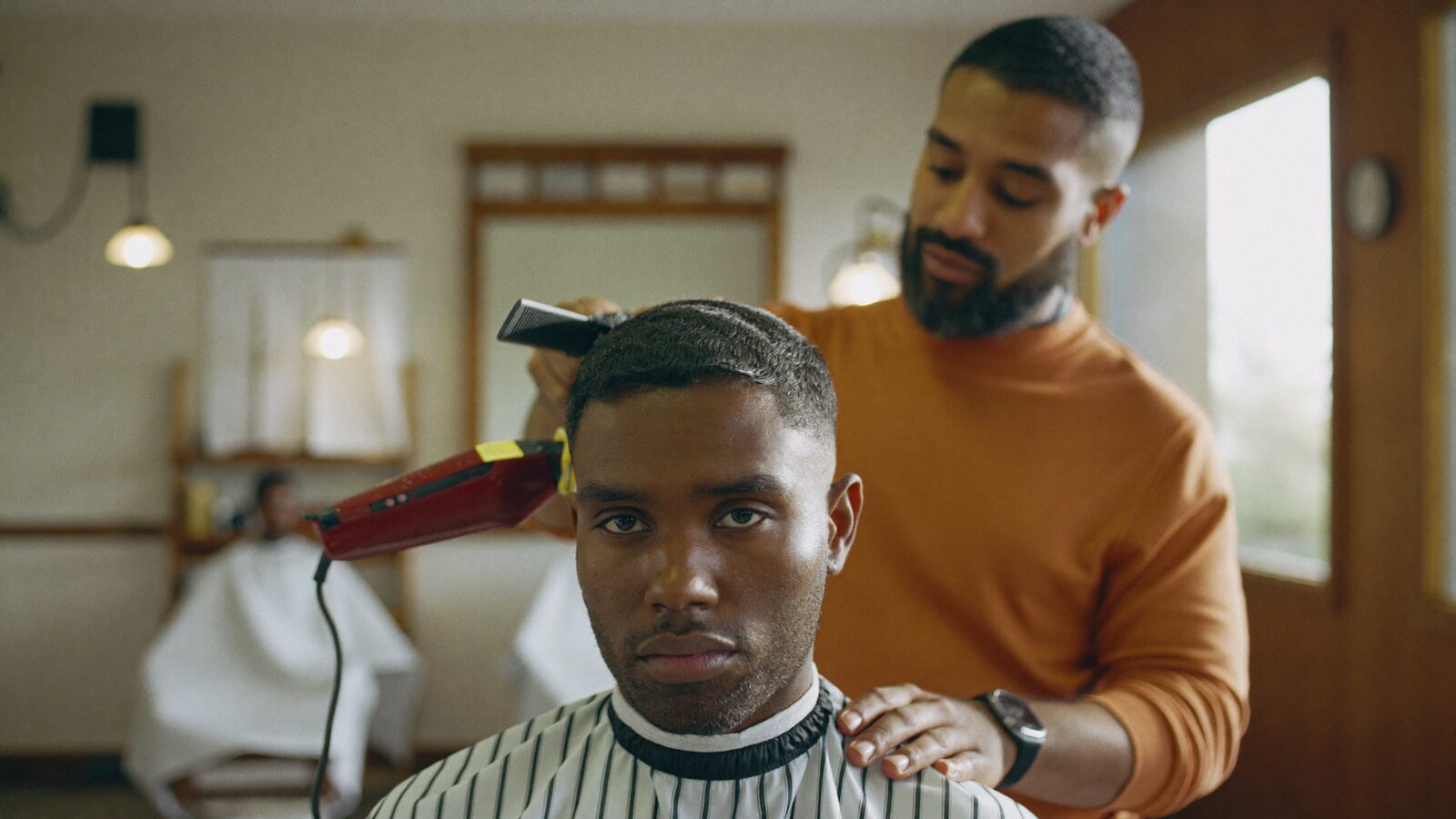
Booking a haircut after hair transplant surgery feels like a small thing until you are sitting in the chair and the barber reaches for the clippers. Most patients have the same questions: how soon is it safe, can the sides be faded, and will the barber notice anything? The short answer is that a light trim is usually fine within a few weeks, while closer clipper work waits a little longer, and your barber needs a quick heads-up before starting.
This guide covers the timing, what clippers and fades mean for a healing donor area, the words to use with your barber, and cuts that help new growth blend in while it fills out. It builds on the general hair transplant recovery timeline, with a focus on grooming, and it is written for Miami patients who like to keep their hair sharp in the heat.
When You Can Get a Haircut After a Transplant
Grafts anchor in the scalp over roughly the first 10 to 14 days. During that window the scabs and crusts around each graft are still lifting, and pressure, pulling or a stray nick from a blade can disturb them. That is why the first two weeks are off limits for any cutting at all, even a tidy-up around the ears.
After that, timing depends on what is being cut and where. The table below shows the typical pattern our patients follow. Your own plan may shift a little based on how your scalp heals, the size of your session and whether you had FUE or FUT, so treat these as guide rails, not deadlines.
| Grooming step | Typical earliest timing | Notes |
| Scissor trim on top (recipient area) | About 3 to 4 weeks | Scabs fully gone, no pulling or tight combing over grafts |
| Clipper trim on sides and back with a long guard | About 2 to 4 weeks | Guard on, light pressure, no going against tender spots |
| Short fade on the donor area | Around 4 to 6 weeks | Once redness settles and the extraction sites have closed |
| Skin fade or bald fade down to the skin | Often 2 to 3 months or later | Depends on how visible the healed donor marks are |
| Clippers directly over transplanted hair on top | Usually 3 months or later | New hairs are fine and fragile early on; check with our team first |
| Hair color, bleach or relaxers | Usually 4 to 6 weeks or later | Chemicals can irritate a healing scalp, so ask before booking |
One thing surprises many people: around weeks 2 to 8, most of the transplanted hairs fall out. This shedding is expected and the follicles stay in place under the skin. If you want to understand that phase before your first cut, our guide to shedding after a hair transplant explains what is normal month by month. A haircut does not cause or speed up this shedding.
Clippers, Fades and the Donor Area
For most Miami patients the real question is not the top, it is the fade. Short sides are the default look here, and the sides and back are exactly where the donor grafts were taken.
What the donor area looks like after FUE
With FUE in Miami, our surgical team removes grafts one at a time with fine handheld instruments, spreading the extractions across the safe donor zone so no single patch is thinned out. Each site leaves a tiny dot that heals over the following weeks and usually fades to a small pale point. At a number 2 or 3 guard these points are typically hidden. At a zero or a foil shave, some people can see them up close, especially early on and on darker skin where small lighter marks show more contrast.
What changes after FUT
A strip procedure leaves one fine linear scar across the back of the head. Hair above it usually covers the line well at moderate lengths. A very tight fade that runs right through the scar line can expose it, so FUT patients often keep the back a little longer or ask the barber to start the fade below the scar.
Why patience pays off
Freshly healed skin can stay pink for several weeks. Taking it down to the skin while the redness is still there makes the donor area look busier than it will a few months later. Waiting until the color evens out gives you a much better sense of how short you can go comfortably for the long term.
Rule of thumb: if the area still feels tender to the touch, looks pink, or has any crust left, the clippers can wait another week. Send our team a quick photo if you are unsure, and we will tell you whether it is ready.
What to Tell Your Barber
A good barber will adapt once they know what is going on. You do not need to share details you are not comfortable with, but a short explanation avoids surprises for both of you. Most patients find that barbers have seen healing transplants before and are happy to adjust.
- Say it up front: mention that you had a hair transplant and roughly when, before the cape goes on.
- Point to the zones: show where the grafts were placed on top and where the donor area is on the back and sides.
- Ask for a guard: request a longer guard than usual for the first cut, then step down over later visits.
- Go easy on pressure: ask them to avoid pressing the clippers hard or dragging a comb firmly across the top.
- Skip harsh extras: pass on hot towels pressed onto the scalp, strong tonics, alcohol-based products and vigorous scalp massage for now.
- No straight razor yet: leave razor line-ups on the neck and around the ears until the donor area has fully settled.
- Agree on length: tell them your goal is to blend, not to show off the newest hairs, so the top should be trimmed lightly.
If you had a beard procedure as well, the same caution applies to line-ups on the cheeks and neck. Our beard transplant patients follow a separate timeline for trimming and shaving the new beard area, and the guide on shaving after a beard transplant covers that in detail.
Styles That Blend New Growth
New hair comes in gradually. From around month 3 or 4, fine hairs start to appear, and they thicken and darken over the following months. In that in-between phase the goal of a haircut is to make the transition look intentional rather than patchy. These styles tend to work well.
Textured crop
A short, choppy top with a bit of texture hides uneven lengths and makes fine new hairs look denser. Paired with a mid fade on the sides once the donor area allows it, this is a practical choice for humid weather because it does not rely on heavy product to hold shape.
Longer sides with a low taper
For the first couple of months, a low taper keeps more length at the sides and back. This covers the donor area while it heals and still looks tidy around the ears and neckline. You can move to a higher fade later.
Messy fringe or forward styling
If the grafts went into the hairline, combing hair slightly forward lets existing hair fall over the new zone while it grows. It is a temporary bridge, not a permanent look, and most people move away from it once the hairline fills in.
Short all over with matched length
Some patients prefer an even, short cut once the donor area has fully healed and the new hair has grown in a bit. Keeping the top and sides closer in length reduces contrast between transplanted and native hair. It suits men who wore their hair short before surgery and want the same look back.
Whatever style you choose, a matte paste or light cream usually behaves better than heavy gels in the first months. Wash it out gently in the evening, and keep the scalp clean rather than layering product day after day.
Grooming in the Miami Heat
South Florida adds a few extra considerations that patients elsewhere rarely think about. Sweat, strong sun and salt or chlorine all affect a scalp that is still settling down, and a fresh fade exposes more skin than usual.
After a short cut, the donor area and any thinner spots on top get more direct sun. Healing skin can darken or redden if it burns, which makes marks more visible for longer. A loose, breathable hat that does not press on the grafts is a simple fix in the early weeks, and a gentle sunscreen on the scalp makes sense once our team clears it. For pools, the beach and the gym, our guide to aftercare in Florida sets out the usual timelines.
Many barbers finish with a spray, an alcohol-based aftershave or talc on the neck. In the first weeks after a fade it is worth asking them to skip anything that stings, and to let you rinse with plain water at home instead.
Choosing a Barber You Trust
We do not recommend specific shops, and you do not need a specialist to cut transplanted hair. What matters more is finding someone who listens, works carefully and is willing to adjust. If you already have a barber you like, there is usually no reason to change. If you are looking for someone new, a few signals help.
- They ask questions first: a barber who asks about your scalp, your usual length and your goals before starting is more likely to adapt to a healing area.
- Their work shows clean blending: look at photos of fades and tapers they have done. Smooth gradients and natural necklines matter more than flashy designs.
- They are comfortable with longer guards: some shops lean heavily on skin fades. You want someone equally confident with a soft taper.
- They keep tools clean: visibly sanitized clippers, fresh blades and clean capes are a must when your skin is still healing.
- They do not rush: a booking with enough time is better than a walk-in squeezed between other clients during your first few visits.
Patients who travel in for surgery sometimes have their first cut at home and later visits closer to the clinic. Either works. Bring a photo of your plan or a description of the treated areas so a new barber knows what to avoid.
Planning Your Haircut Before Surgery
A little planning before procedure day makes the first months easier. Many FUE patients have the donor area clipped short for the procedure, so arriving with a fresh, neat cut a few days beforehand means the regrowth looks even. If you usually wear a skin fade, it can help to let the sides grow slightly in the weeks before surgery so the transition back is less noticeable.
Think about any events in the first two months as well. If you have a wedding, a work trip or a vacation coming up, tell us during your consultation. Dr. Adam Rubinstein, MD FACS reviews every plan, and the team can factor timing and your usual haircut into the design, including where grafts are placed and how the donor area is harvested. Patients who start with an online photo and video consultation can raise these questions early, then visit our Aventura clinic for the in-person assessment and a written quote.
Plan a Transplant Around Your Haircut
Book a free consultation in Aventura or start online with photos and a video call. We will map your donor area and talk through how short you like to wear your hair.