Hair Transplant Miami
Hair Transplant Overview
Hair plays a significant role in one’s appearance and self-esteem. For that reason, many people invest effort in grooming their hair to enhance their overall look and confidence. Here’s how a hair transplant in Miami can make a difference.
Hair thinning, loss, and baldness can result from factors like age, stress, health issues, and genetics. While a world without bias would be ideal, societal stereotypes linking baldness to aging and decreased attractiveness show up every day. This can erode confidence and discourage individuals from engaging confidently with others.
If you’re a man, you probably don’t want to hear that some people are less interested in dating bald men. And if you’re a woman, you wouldn’t want others to notice your thinning hair. Unfortunately, this is a real concern for many people.
You don’t have to endure the gradual loss of your hair or wait until it’s completely gone. When you notice an issue, booking a hair restoration consultation right away keeps the most options open and helps determine if a hair transplant is the right choice for you.
Since the 1950s, hair transplant procedures have been used to address bald or thinning areas on the scalp. This safe and effective method has shown remarkable results for both men and women, restoring thinning areas and achieving a fuller, denser look.
Unlike many modern dermatological clinics, our surgical team at Nova Medical Hair Transplant in Miami embraces a “boutique” style approach to ensure the procedure’s comfort and efficacy. The same attention applies whether you want an everyday restoration or our discreet celebrity hair transplant Miami service.
We offer two distinct processes tailored to your case: follicular unit grafting (FUG, the strip method) and follicular unit extraction (FUE), both within our realm of expertise.
Our paramount goal is to employ the most suitable technique for a successful procedure that meets your needs. Our clients frequently share their testimonials, highlighting how the surgery restored their self-confidence and gave them a natural-looking, confidence-inducing head of hair.
Your Hair, Your Plan
Three questions every Miami consultation answers before a single graft is counted
A sound plan starts with the basics. At our Aventura clinic we walk through what the surgery actually involves, whether your donor hair and health make you a fit, and how the texture and pattern of your own hair should steer the design.
What Does a Hair Transplant Involve?
A hair transplant moves healthy follicles from a permanent donor zone, usually the back and sides of the scalp, into areas where hair has thinned or receded. Those follicles keep growing after the move, so the new hair is living hair rather than a covering. Grafts are collected either one at a time (FUE) or from a thin strip of scalp (FUT), and each one is set by hand at the angle your own hair grows.
Hair character shapes how this is done. Curly and coily follicles curve under the skin and need a careful extraction path so they stay intact, while very fine, straight hair covers less scalp per strand and is usually planted at closer spacing to look full.
Am I a Good Candidate?
Most good candidates have pattern thinning that has slowed or settled, a donor area dense enough to share without looking sparse itself, and general health that supports a minor outpatient procedure. Age matters less than stability: when loss is still moving quickly, the plan has to allow for hair that may be lost later.
The location of the loss changes the design too. A receding hairline is rebuilt with a soft, irregular front edge, a thinning top is filled evenly, and the crown and temples are treated as separate zones. Traction loss from tight braids or ponytails can also be addressed, along with styling advice so the new growth is protected.
Why a Personal Plan Matters
When these details are weighed together, the result looks like hair you grew yourself. Dr. Adam Rubinstein, MD reviews each Miami plan before the procedure date and checks progress at follow-up visits.

Benefits of Getting a
Hair Transplant in Miami
Wigs, toppers, fibers and concealers hide thinning for a day or a few weeks, then need replacing. A transplant works differently: it moves follicles you were born with out of a stable donor area and into the places that have thinned, and they go on growing there. With nothing synthetic involved, the result holds up in daylight and up close.
Day-to-day care is simple. After the new hair comes through, it gets cut, washed and styled like the rest of your head, with no adhesives, clips or salon upkeep. In South Florida heat and humidity, that also means no hairpiece to sweat under at the beach or by the pool.
Each plan follows the way you are losing hair. A receding front, sparse crown, recessed temples or patchy spots each get a design matched to your age and facial proportions rather than one template for everyone.
Donor follicles resist DHT, the hormone behind pattern baldness, so transplanted hair is permanent. Set against years of spending on temporary products, one carefully planned procedure is often the more sensible investment.
It is a minimally invasive surgery, and healing tends to be easier than patients expect. Many return to their jobs in a few days, noticing little more than mild tenderness, one reason Miami patients choose a transplant to restore their hair and their confidence.
Before & After Gallery
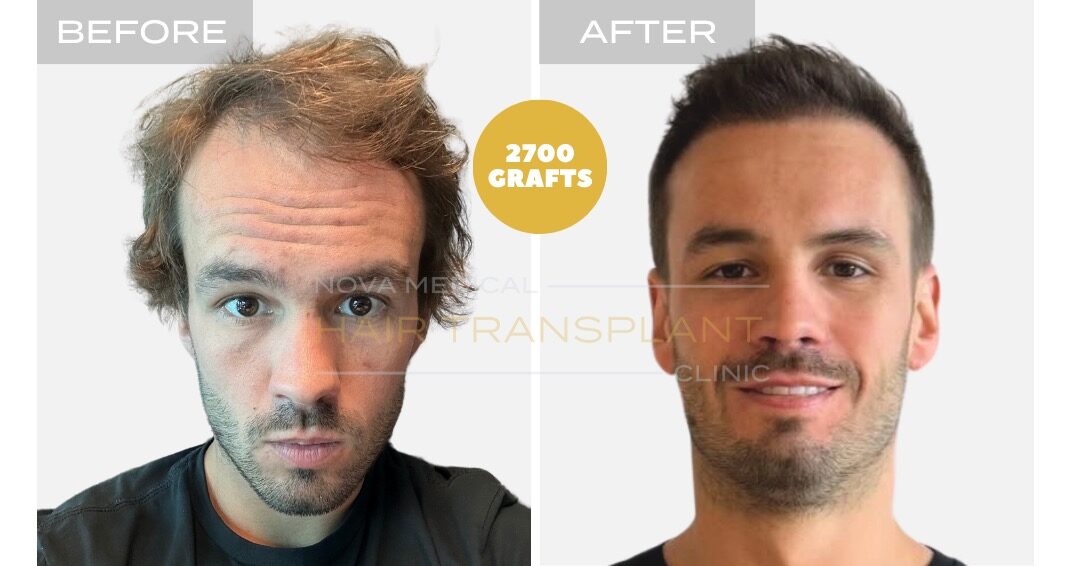
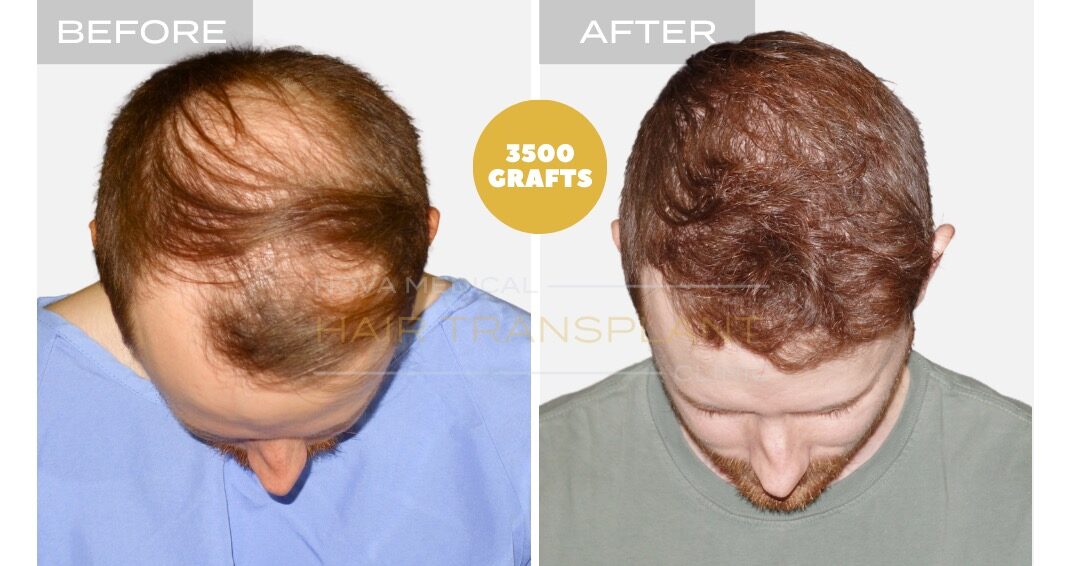
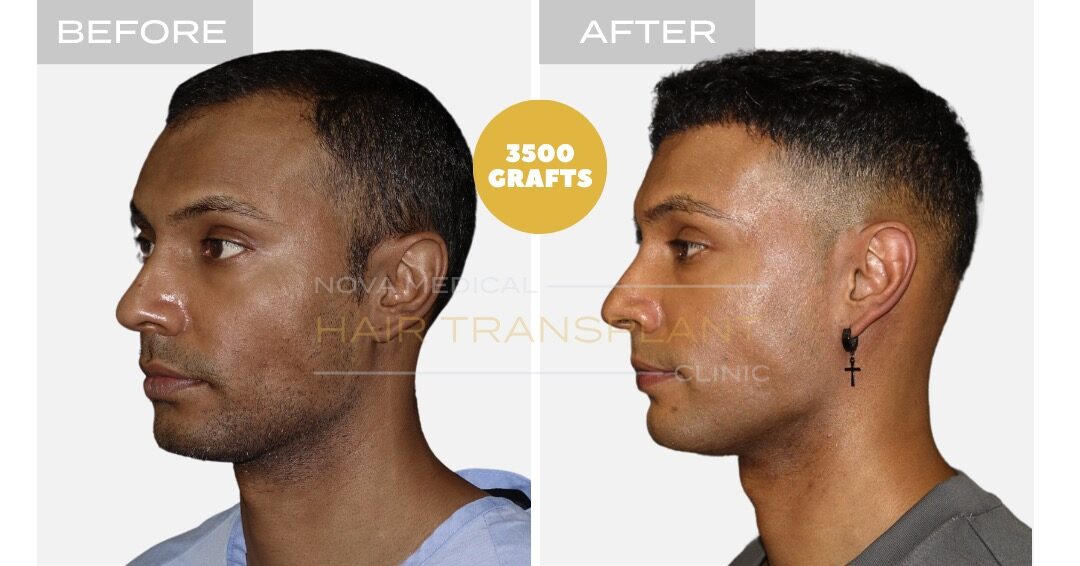
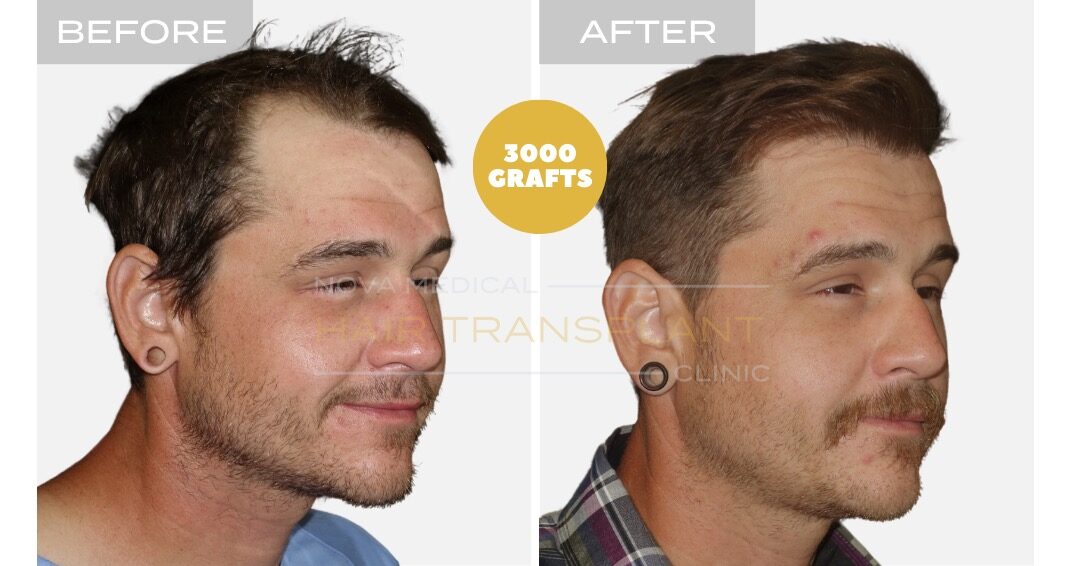
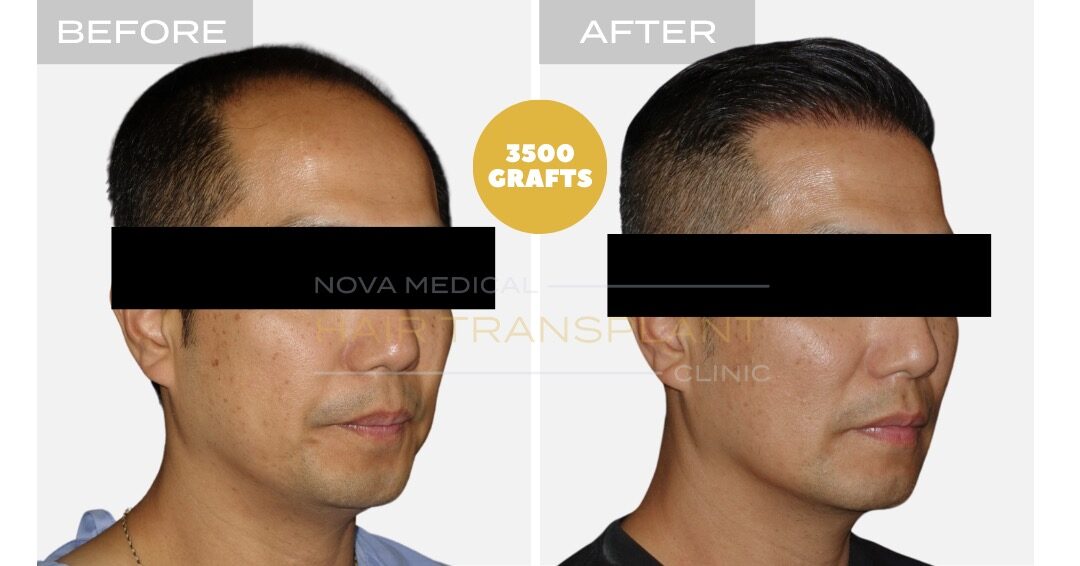
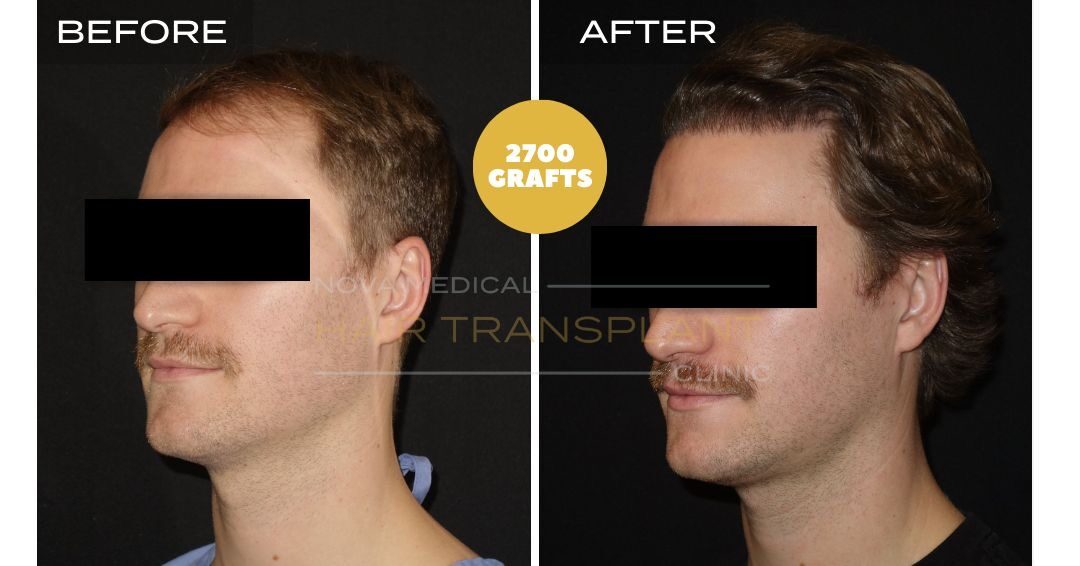
What is DHI?
Direct Hair Implantation, also known as DHI, is a cutting-edge hair restoration technique in Miami that offers individuals facing hair loss a sophisticated solution.
Unlike traditional methods, DHI employs a specialized tool known as the DHI implanter, enabling the precise placement of hair follicles without the need for prior incisions. This approach allows for control of the depth, direction, and angle at which each follicle is implanted, so results look natural and harmonious.
The key advantage of DHI is its minimally invasive nature, which can reduce recovery time and discomfort for the patient. This method is particularly suitable for those seeking dense, natural-looking hair without visible scarring. At our Miami location, our surgeon and surgical team are experienced at harnessing the precision of DHI to craft outcomes that aim to meet and exceed patient expectations, enhancing both appearance and confidence.
DHI is not the right fit for every case. If it interests you, mention it during your free assessment and Dr. Adam Rubinstein, MD will explain how it compares with the technique recommended for your donor area and goals.
How DHI Works in Miami
In Miami, our Direct Hair Implantation process begins with a personal consultation. Our team works closely with each client to understand their hair restoration goals and to craft a tailored approach that respects their unique hairline and desired density. On the day of the procedure, we prepare and numb the scalp for a comfortable experience.
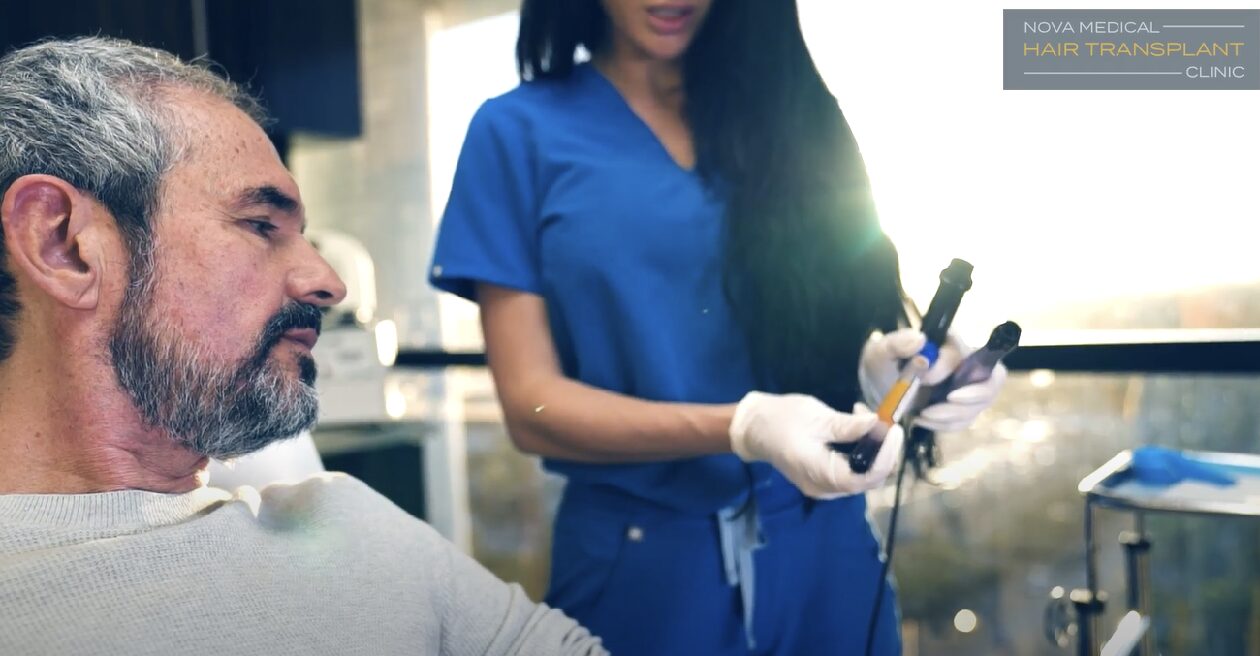
With meticulous care, our specialists extract individual hair follicles one at a time and load them into the DHI implanter pen, a tool that allows for immediate and precise placement into the thinning areas of the scalp. This direct implantation step is what sets DHI apart, offering fine control over the aesthetic outcome and a natural, dense appearance that complements the individual’s features and style.
Following the procedure, we provide detailed aftercare instructions to support healing and schedule follow-up visits to monitor hair growth and scalp health. Initial growth is visible in just a few months, with the complete results within a year, well suited to Miami’s dynamic lifestyle.
DHI vs. FUE in Miami
While both Direct Hair Implantation (DHI) and Follicular Unit Extraction (FUE) in Miami are proven, minimally invasive hair restoration techniques, they cater to different needs and preferences.
FUE involves extracting hair follicles from the donor area, which are then individually implanted into recipient sites. This technique is valued for its flexibility and minimal scarring, allowing for a quick recovery and natural, discreet results.
DHI, on the other hand, eliminates the need to create incisions before implantation. Instead, hair follicles are directly implanted using the DHI implanter pen, providing precise control over the placement and angle of each hair. FUE offers many of the same benefits, including the potential for a denser, natural-looking hairline, and both methods are effective in achieving these results.
At our Miami location, we understand the importance of offering a service that aligns with our clients’ lifestyles and aesthetic goals. Whether you choose DHI for its precision and density or FUE for its versatility and recovery time, our team is committed to personalized results for each procedure, with Dr. Adam Rubinstein, MD overseeing every plan.
What is FUE?
FUE, also known as follicular unit extraction, is a technique that takes hair from the rear of the scalp and avoids a linear scar. Rather, small micrografts are individually harvested using a 1-millimeter punch tool, resulting in nearly invisible pinpoint scars.
The advantage of this technique is that the donor hair at the back can be trimmed short without revealing the micrografting. While graft harvesting is time-consuming, its benefits are well worth it for patients.
FUE is the recommended treatment for younger individuals, African-Americans, those with limited donor hair availability, and transgender men aiming to grow facial hair such as beards, mustaches, sideburns, and thick eyebrows.
What is FUT?
FUT stands for follicular unit transplantation. In this technique, a single strip of hair is harvested from the back of the head, and the area is carefully sutured to minimize the visibility of scars during recovery. The hair strands, typically ranging from 1 to 4 per micrograft, are then transplanted into the areas of the scalp with hair loss.
Because each graft is placed in a natural growth pattern, the transplanted hair appears entirely natural. When recreating the hairline, age is taken into account to achieve the most fitting aesthetic outcome.
Need more information about either of these techniques?
But your hair can be
Permanent hair, grown from your own donor follicles.
Request a Free Consultation
No obligation • Same-week availability
Hair Transplant Procedure Overview
~2 minutes readThe journey toward a hair transplant begins with your decision to undergo a hair transplant in Miami. The first step involves selecting the right medical facility. It’s crucial to ensure the procedure is carried out by a qualified hair restoration surgical team who understands your specific hair condition and needs.
At Nova Medical Hair Transplant Miami, our fully accredited on-site operating room is held to strict standards of safety, sterility, and comfort for your hair transplant experience. With our skilled medical team, you are in capable hands.
An initial appointment is held first, a one-on-one consultation to understand your unique concerns. We will review any prior hair transplantation attempts, assess the products you’ve used for your hair, and evaluate your medical history and medication usage.
A physical examination is then carried out to ascertain the pattern of hair loss. The quality of your hair, including texture, thickness, and color, is considered to determine your eligibility for the surgery. If you are a suitable candidate, the procedure is scheduled.
The operation generally begins in the early morning. You’ll change into a comfortable gown, slippers, and a plush robe to prepare for the procedure.
A final consultation outlines how the procedure will unfold. During this discussion, the goals and objectives of the hair transplant are reviewed with you, with Dr. Adam Rubinstein, MD overseeing the plan.
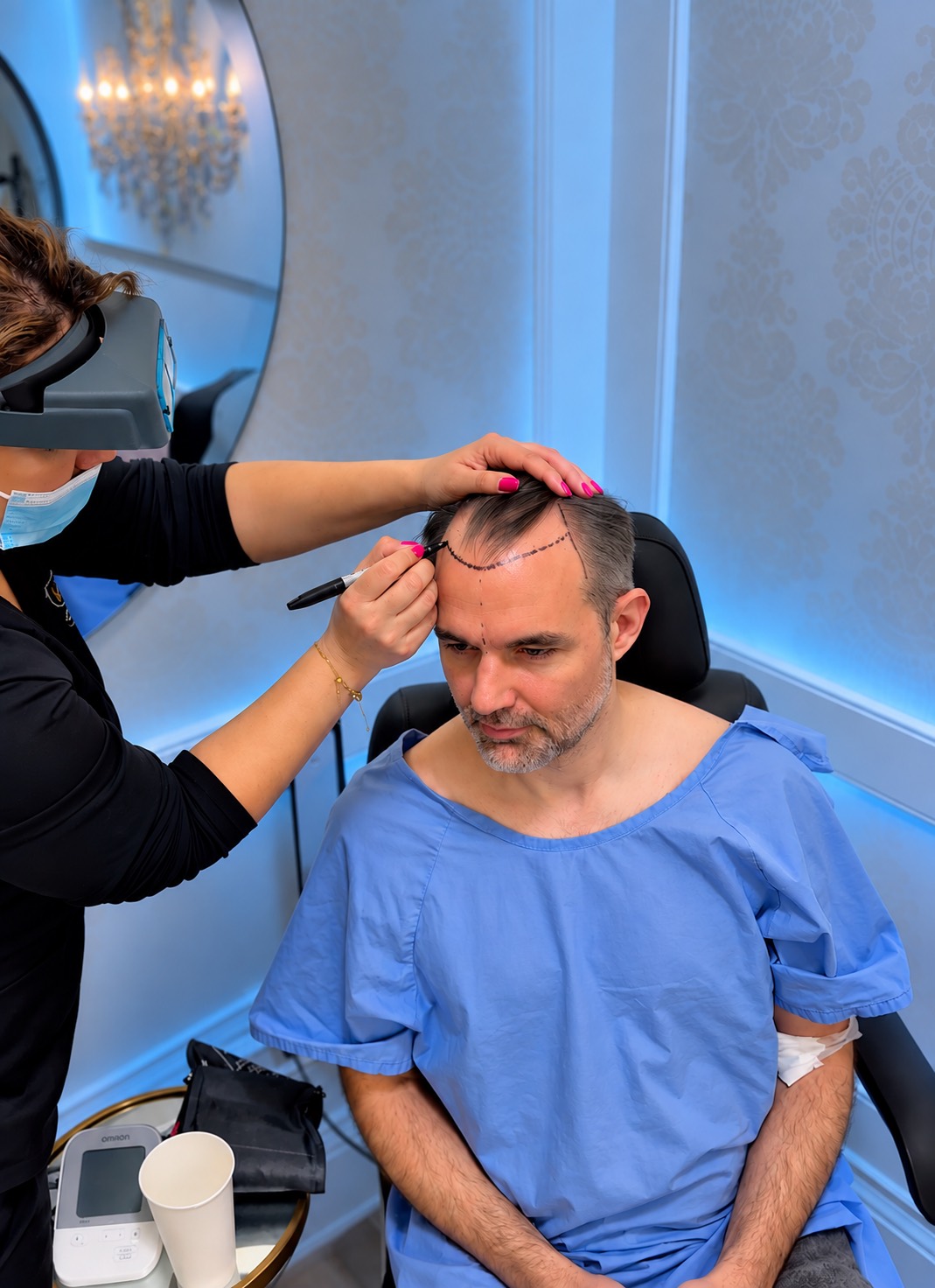
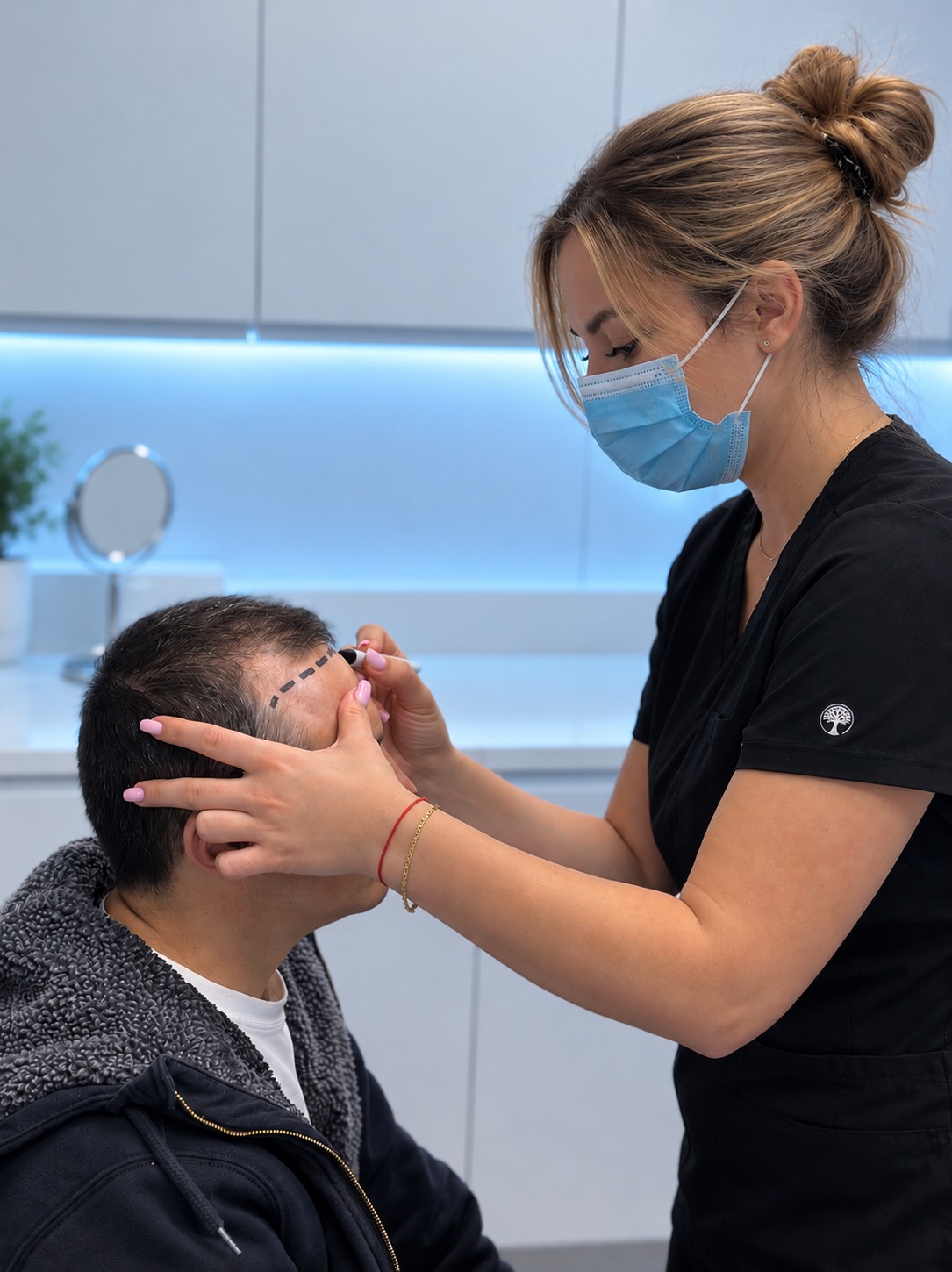
The design of the hairline is then established, whether advancing the existing hairline or creating a new one, with a focus on natural appearance and precise symmetry. Hair photos are also taken for reference and comparison.
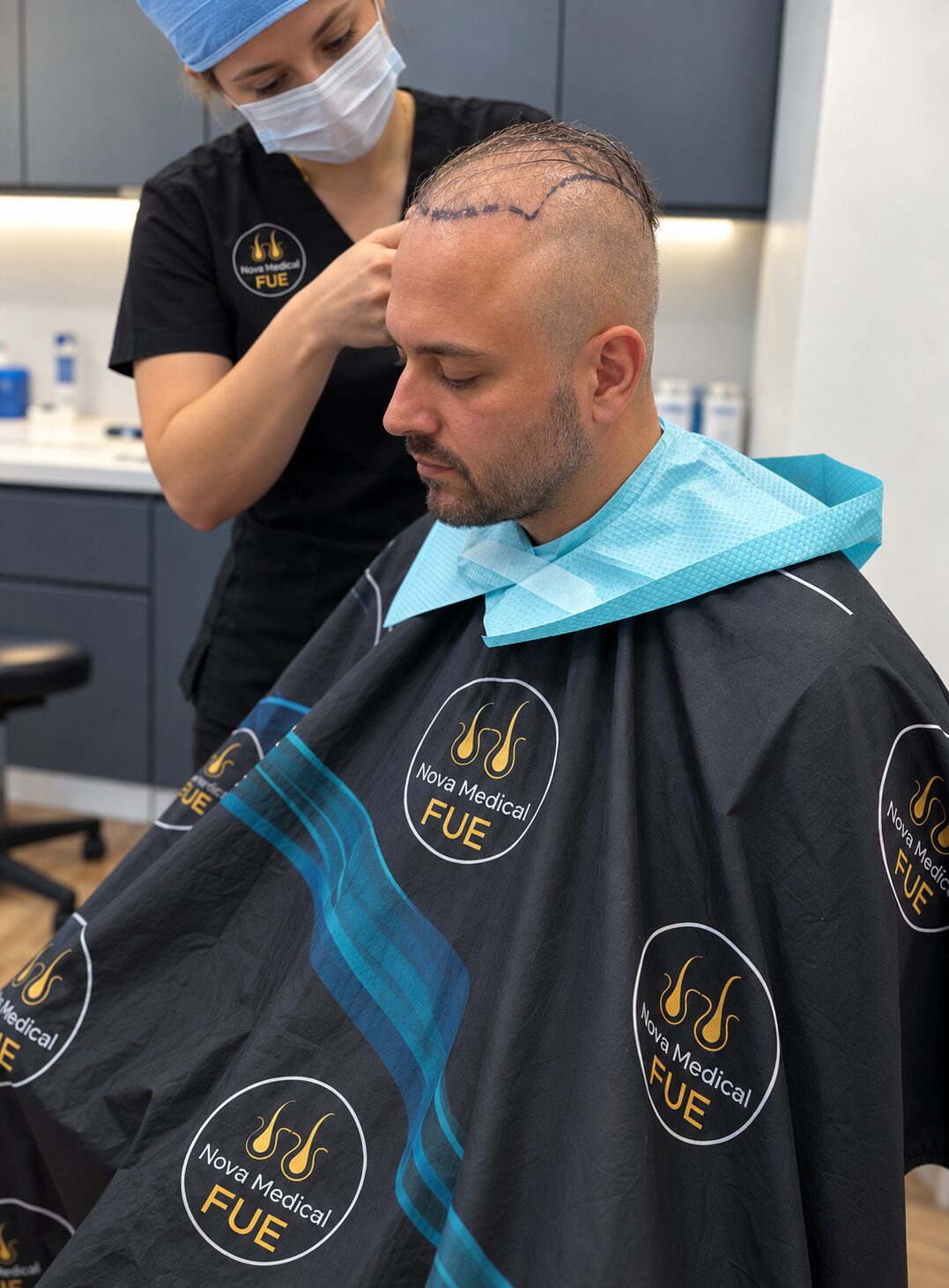
Once everything is finalized, the hair transplant itself begins. For follicular unit extraction (FUE), the hair at the back is trimmed to a military-style cut. With the strip technique, only the area where the strip will be harvested needs trimming.
You will then be escorted to the procedure room for local anesthesia. Once the scalp is numbed, graft harvesting begins. With FUE, each hair follicle is meticulously harvested one at a time under high magnification.
Each graft is individually selected to ensure optimal quality for hair restoration. With the strip technique, the strip is removed and the incision is carefully sutured back together.
During this phase, you’ll be positioned face-down, allowing the surgical team a clear view of the hair at the back. To pass the time, many patients bring earbuds and a phone to enjoy music or podcasts. You can do the same or even catch a nap if you prefer.
After graft harvesting, the medical team examines each graft under a microscope to confirm its quality. The transplant phase then begins in the transplant room, following the “stick and plant” technique. This approach gives each graft a designated site, avoiding unnecessary openings and allowing precise placement for natural results.
Single-hair grafts are kept for the very front of the hairline, while grafts carrying two to four hairs are set further back to build body. Every site is angled to match the direction your existing hair grows, so the new hair falls in with it.
As the grafts are planted, you’ll sit back in a comfortable reclining chair to watch TV or simply relax. Once the procedure is complete, many patients are surprised by how easy and comfortable the experience was. Feel free to explore our patients’ journeys in our before and after gallery and their reviews on our clinic’s Google listing.
Hair Transplant Recovery & Hair Growth
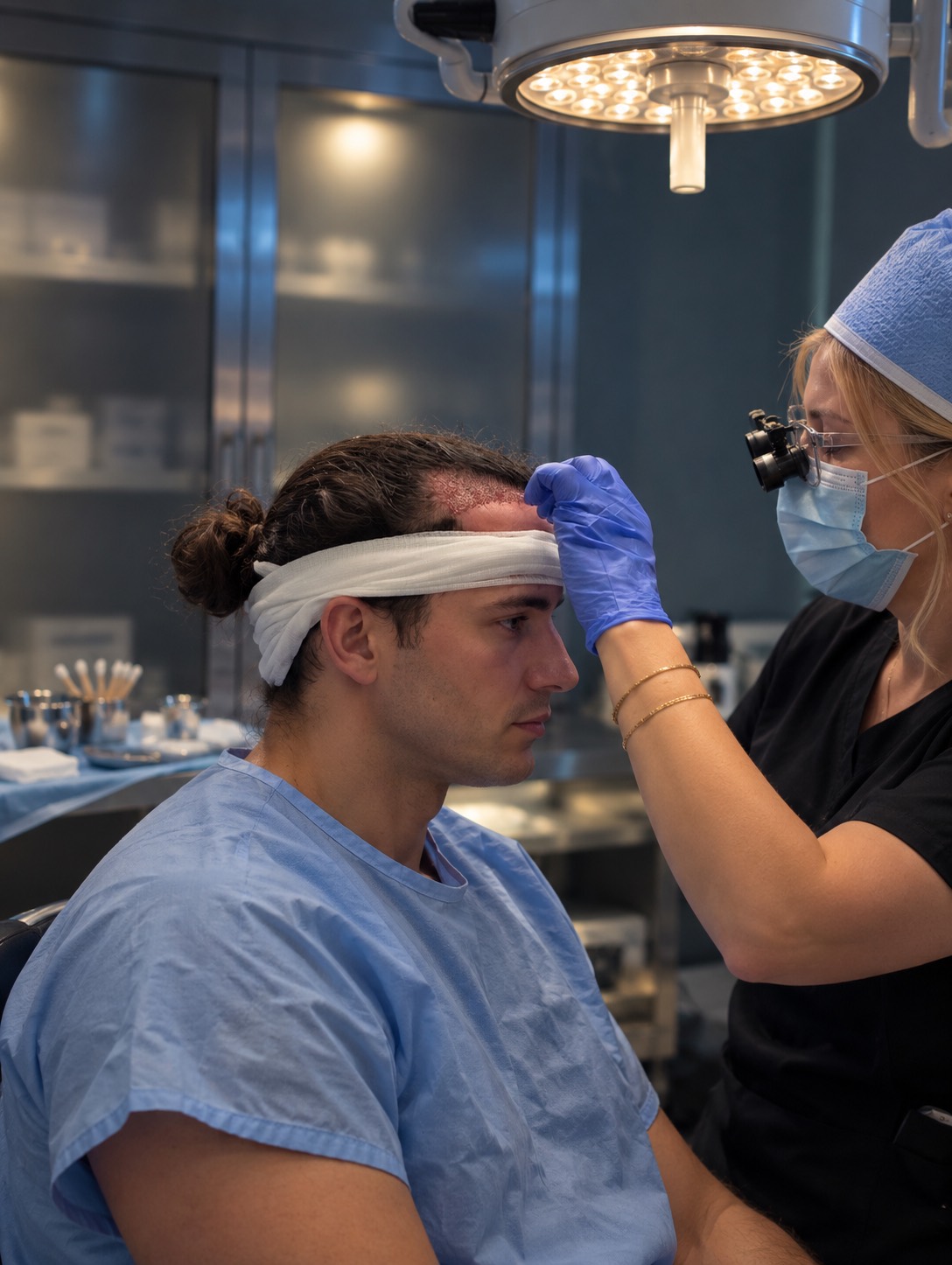
Post-procedure, patients leave with light bandages or a head cover to protect the area. Immediately after a hair transplant procedure in Miami, patients notice a fuller head of hair.
To mitigate swelling, patients are prescribed antibiotics and medication for the initial three days. Mild pain relief medication is recommended for the first two nights to make sleeping more comfortable.
With minimal downtime, most patients can promptly resume work and daily activities. Hair washing is manageable after surgery, as long as it is done gently.
Activities like swimming, intense exercise, and weightlifting require a wait of about one to two weeks. In Miami, that includes the ocean and the pool.
Transplanted hair growth becomes visible within four to six months. To encourage faster growth, many patients opt for Minoxidil, a topical solution applied nightly, although some see growth soon after the transplant without it.
While the full result of a hair transplant in Miami usually emerges within 12 to 18 months, patients can expect continued growth after that timeframe, providing a fuller head of hair for years to come.
Looking After Your Hair in the Years After a Transplant
Long-term care is mostly about protecting the scalp and the hair around your grafts. A mild, sulfate-free shampoo, fewer harsh chemical treatments and, under the strong South Florida sun, a hat or scalp sunscreen all help. Some patients also add maintenance treatments such as PRP to support native hair that was not transplanted.
Periodic check-ins with our team let us track how your scalp and surrounding hair are doing and spot any new thinning early.
Eating well, staying hydrated in the heat and keeping up general health habits all support the hair you have, transplanted and native alike.