
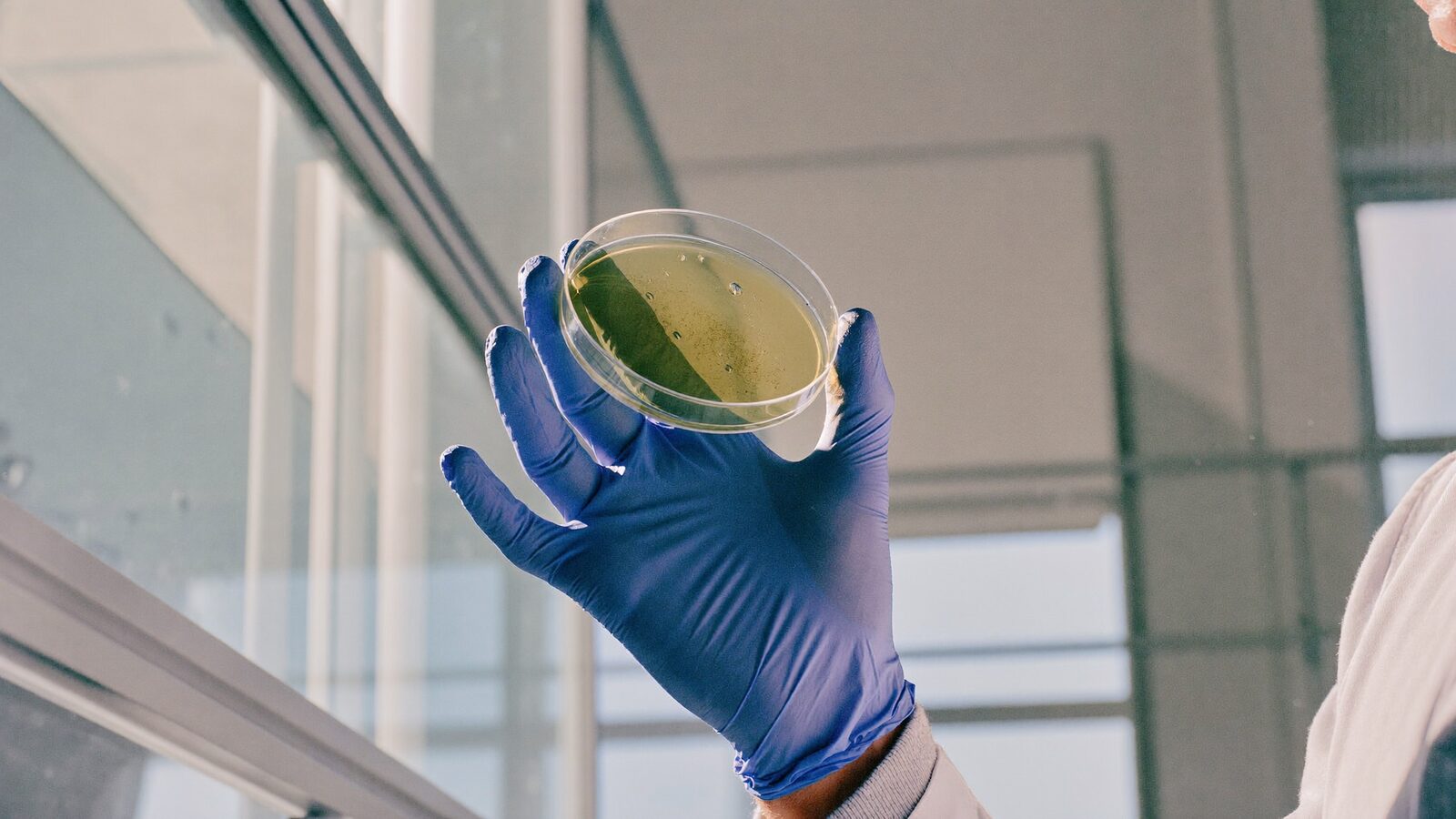
Every few months a headline promises that hair cloning is just around the corner, and every few months someone in our Aventura consultation room asks whether they should wait for it instead of booking surgery. It is a fair question. If a lab could grow unlimited new follicles from a handful of your own cells, the math of hair restoration would change overnight, because the donor area would no longer set the ceiling on how much coverage you can get.
The honest answer for 2026 is that cloned hair is still a research project, not a treatment you can buy, and most of the stem cell offers you see online sit somewhere between early science and pure marketing. This guide separates the two, explains what researchers are actually working on, and shows how today's proven options, from a hair transplant in Miami to medication and PRP, fit around that uncertainty.
What Hair Cloning Actually Means
"Cloning" is a loose word here. Nobody is trying to copy your whole scalp. The real goal, often called hair multiplication or follicle regeneration, is to take a small sample of cells from a healthy follicle, grow more of them in a lab, and then put those cells back into thinning areas so they form new, working follicles.
The key players are the dermal papilla cells, a tiny cluster at the base of each follicle that sends the signals telling the follicle to build a hair. In your scalp they do this job quietly for decades. In a dish, they tend to forget it. As the cells divide and multiply, they lose much of their ability to trigger new hair growth, and that single problem has held the field back for years.
Researchers are attacking it from a few directions:
- Cell multiplication: growing dermal papilla cells in conditions that keep their hair-inducing signals switched on, then injecting them into the scalp.
- Bioengineered follicles: building a complete follicle "seed" in the lab from more than one cell type, then implanting it so it can mature in place.
- Follicle reactivation: using drugs, signaling molecules or cell products to wake up miniaturized follicles that are still present but producing thin, short hairs.
Each approach has shown promise in animal models and small early studies. None has produced a treatment that reliably grows natural, permanent hair in people, at the right angle and direction, with the right color and texture, in a form a clinic can offer safely and affordably.
Stem Cell Therapies on Offer Today
Search "stem cell hair treatment Florida" and you will find plenty of clinics happy to book you. It helps to know what those treatments usually are, because the label covers several very different things.
| What is sold as "stem cell" | What it usually involves | Where it stands |
| Fat-derived cell injections | Liposuction of a small amount of fat, processing, then injecting the mix into the scalp | Experimental; results vary and long-term data is thin |
| Follicle cell suspensions | Small scalp punches are minced or processed and the cell mix is injected back | Experimental; mainly small studies, not a replacement for grafts |
| Exosomes and "secretome" products | Lab-made fluids containing signaling particles from cultured cells, applied after microneedling or injection | Early research; products and quality vary widely |
| Plant "stem cell" serums | Topical cosmetics with plant extracts | Marketing term; plant cells cannot become human hair |
| Lab-grown follicles (true hair cloning) | Multiplying your own follicle cells and implanting them | Still in research; not available as a treatment |
Notice the pattern. The procedures you can actually buy today use cells or cell products to stimulate existing follicles. They do not create new follicles in bald skin. That difference matters, because a patient with a shiny crown has very few follicles left to stimulate, while a patient with early thinning might see some benefit from almost any approach that supports the hair still there.
Stem cells as a transplant add-on
Some clinics pitch stem cell solutions as a way to boost graft survival after a transplant. The idea is reasonable to study, and researchers continue to look at how to help grafts settle in. In practice, graft survival depends mostly on things you can see and control: careful extraction, keeping grafts cool and moist outside the body, gentle placement and good aftercare. A well-run procedure does not need an experimental product layered on top to work.
What the Research Shows So Far
Reading the research on hair multiplication is a lesson in patience. The broad picture, without overstating any single paper, looks like this:
- Proof of concept exists: labs have grown follicle-like structures and produced hair in animal models, which shows the biology is not impossible.
- Human results are early: small human studies of injected cells have reported modest changes in hair density in some participants, often in people who still had plenty of follicles.
- Control is the hard part: a useful hair has to point the right way, match its neighbors and keep cycling for years. Getting a cell to grow a hair is very different from getting it to grow a natural one.
- Safety needs time: anything that pushes cells to multiply has to be watched carefully for unwanted growth, and that kind of monitoring takes years of follow-up.
- Scaling is expensive: even when a method works, producing personalized cells for every patient under strict lab standards is slow and costly.
Put together, most observers expect true hair cloning to arrive gradually, if it arrives at all, starting with narrow uses and high prices. A therapy that clears clinical trials and regulatory review in the United States tends to take many years from first human study to wide availability. That timeline is not a reason to give up hope. It is a reason not to plan your hairline around it.
Plain truth: Hair cloning and stem cell treatments are experimental. If a clinic presents either one as a finished, proven fix for baldness, that claim is ahead of the science.
Red Flags in Stem Cell Hair Marketing
South Florida has no shortage of med spas and wellness clinics, and stem cell language shows up in a lot of their ads. Most patients cannot evaluate lab science on their own, so watch for signs that the pitch is doing more work than the evidence:
- "Regrow a full head of hair": no stem cell product has shown it can rebuild coverage in areas that are already bald.
- Before-and-after photos with changed lighting: wet hair, a new haircut, a darker background or a fiber spray can make any scalp look thicker.
- Pressure to pay today: limited-time pricing on an experimental treatment is a sales tactic, not a medical reason.
- Vague answers about what is injected: you should be told exactly what the product is, where it comes from and how it is handled.
- No physician on the plan: any procedure that involves harvesting tissue or injecting cell products deserves a qualified doctor reviewing it.
- "FDA approved" used loosely: a device used in processing may be cleared for something else entirely, which is not the same as the treatment being approved for hair loss.
- High prices with no written plan: if you cannot get the cost, the number of sessions and the expected outcome on paper, keep your wallet closed.
How Waiting Can Cost You Hair
The quiet risk of chasing future technology is what happens to your hair while you wait. Pattern hair loss tends to keep moving. Follicles that are thinning today can stop producing visible hair over the next several years, and once a follicle is gone, even a future cloning therapy designed to reactivate tired follicles would have nothing left to work on.
That is why we usually suggest separating two decisions. The first is how to protect what you have now. The second is whether and when to restore what you have already lost. Medical therapy can often be started right away, and it keeps your options open for any technology that comes later. Our guide to finasteride, minoxidil and other medication walks through how those drugs fit before and after surgery.
What Works Now: Proven Options
While the lab work continues, three tools carry most of the load for real patients today. They are not glamorous, but they are well understood, and they can be combined.
Medication to slow the loss
For men with pattern hair loss, finasteride and minoxidil remain the most studied options for holding on to existing hair. They do not suit everyone, and side effects should be discussed with a physician, but for many people they slow the process enough to make a transplant last longer and look fuller.
PRP for supporting thinning hair
Platelet-rich plasma uses a concentrate made from your own blood to support follicles that are thinning but still alive. It is sometimes grouped with stem cell treatments in ads, but it is a different thing. We offer PRP hair loss treatment as a separate service, and our article on combining PRP with a transplant explains when it tends to help.
Hair transplant for areas already lost
A transplant moves follicles from the back and sides of the scalp, where hair is usually resistant to pattern loss, into thinning areas. Those follicles are already "programmed" to grow, so you are relying on proven biology rather than lab culture. At Nova Medical, our surgical team extracts grafts by hand with fine handheld instruments using FUE, and FUT and DHI-style placement are also available. Dr. Adam Rubinstein, MD FACS, a board-certified plastic surgeon, reviews and approves every plan and oversees the procedure.
| Option | Status in 2026 | Who it suits |
| Hair cloning | Research only | Not available to patients |
| Stem cell injections | Experimental | Only in a properly run clinical study |
| Medication | Established | Most men with active pattern loss |
| PRP | Widely used | Thinning hair with follicles still present |
| Hair transplant | Established | Stable loss with a healthy donor area |
Why the Donor Area Is the Real Limit
The biggest promise of hair cloning is solving donor supply, so it helps to understand that limit today. Each person has a finite number of permanent follicles at the back and sides of the scalp. A responsible plan uses some of them and leaves a reserve for loss that may come later. At our clinic, up to about 4,000 grafts can be moved in one day depending on donor density, very large plans are split into two sessions, and the donor area is protected rather than overharvested.
For most people with moderate loss, that supply is enough to rebuild a natural hairline and add meaningful density where it shows most. Transplanted hair also tends to keep growing for decades, which our post on how long hair transplant results last covers in detail. If cloning one day becomes practical, a patient who has protected the donor area and the remaining native hair will be well placed to use it as a top-up.
At Nova Medical in Aventura, your consultation is free and you leave with a written quote. Pricing runs $3.99 to $7.99 per graft with no session fees, most procedures fall between $4,000 and $15,000, and 0% financing is available for the first 12 months. If you live farther out in Broward or Palm Beach, or you are flying in, we can start with an online photo and video consultation before you visit.
Get a Straight Answer on Your Options
Book a free consultation in Aventura or online and find out which proven treatment fits your hair loss today, with a written quote and no session fees.